Practice 🇭🇺 Hungarian by Listening, Speaking, and Chatting
Train your ear with real Budapest-to-Debrecen speech. Chat with AI tutors to sharpen comprehension. Get vowel harmony and 18 cases explained in context — ready for nagyi's phone calls, your Budapest thermal bath trip, or medical school in Pécs.
How Erla Helps You Practice Hungarian
Hear Real Hungarian, Not Slowed-Down Audio
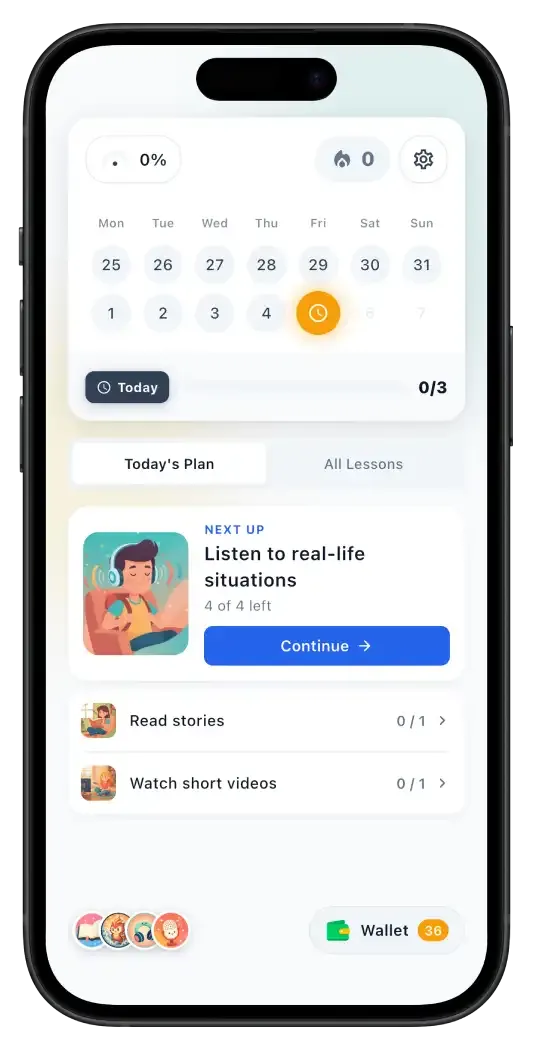
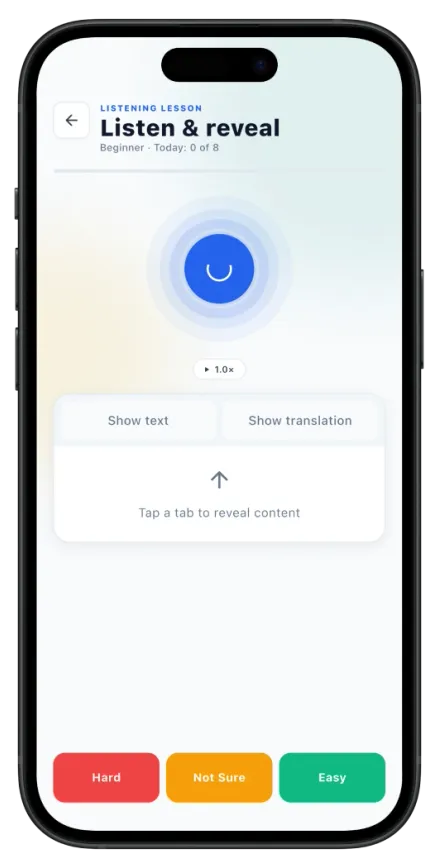
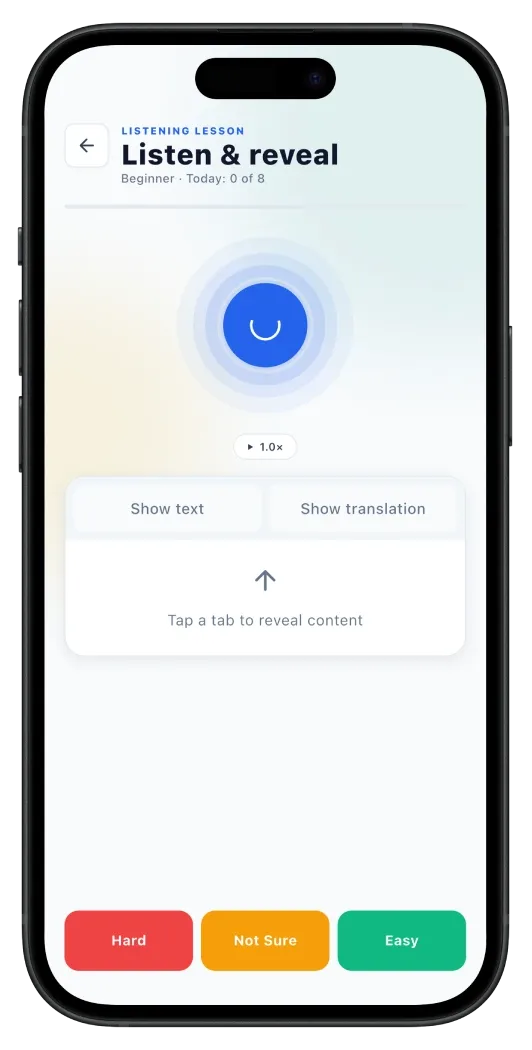
Listen to natural Hungarian sentences — the way people actually speak in Budapest, Debrecen, or Szeged. Try to understand before revealing text. Your ear adapts to Hungarian's melodic stress and vowel harmony faster than you'd expect.
Read Hungarian Stories That Build Vocabulary
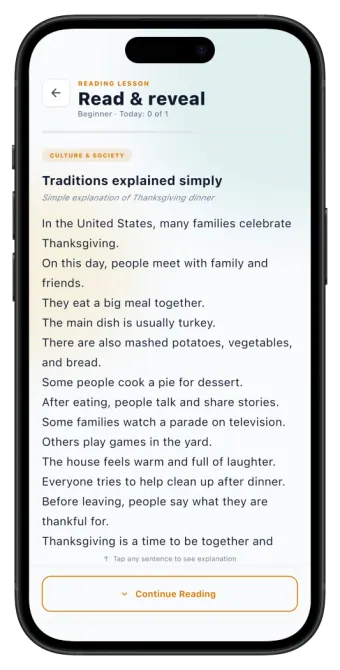
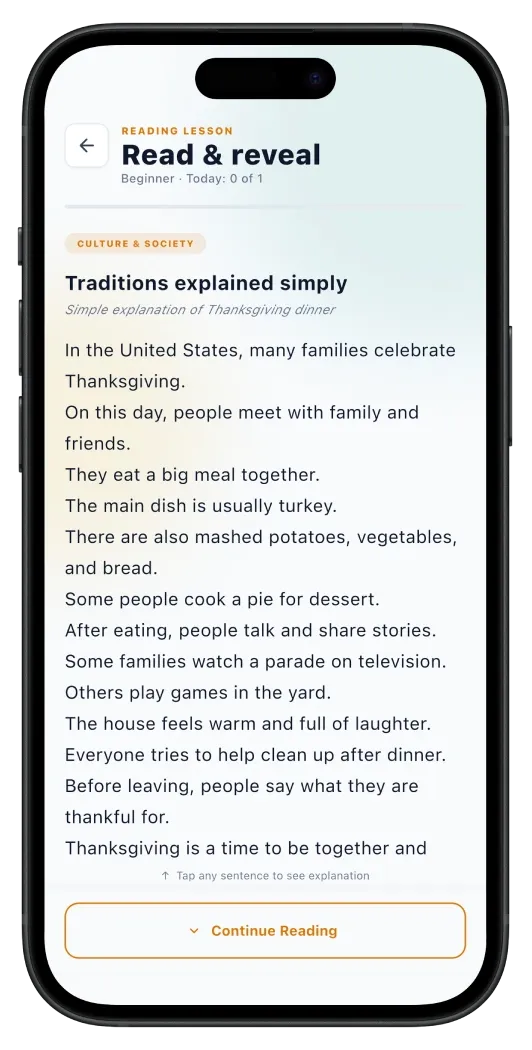
Short, engaging stories in Hungarian — thermal bath rituals, pálinka etiquette, ruin-bar nights, paprika cuisine. You pick up new words because they're part of a story, not a flashcard pile. Tap any sentence to explore.

Watch Hungarian Videos, Subtitles Second
Bite-sized videos play in Hungarian with no text — training your brain to process the language naturally. On the second play, subtitles appear so you can verify what you actually caught. Swipe to continue.
Chat in Hungarian Right Now
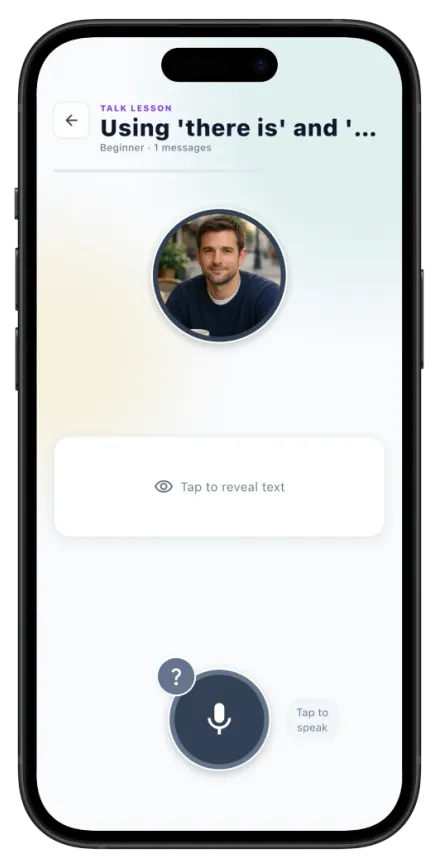
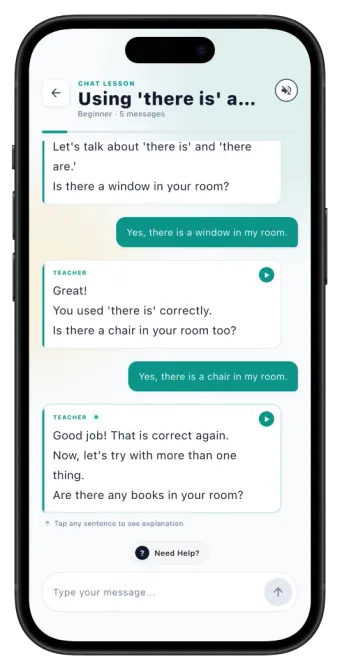
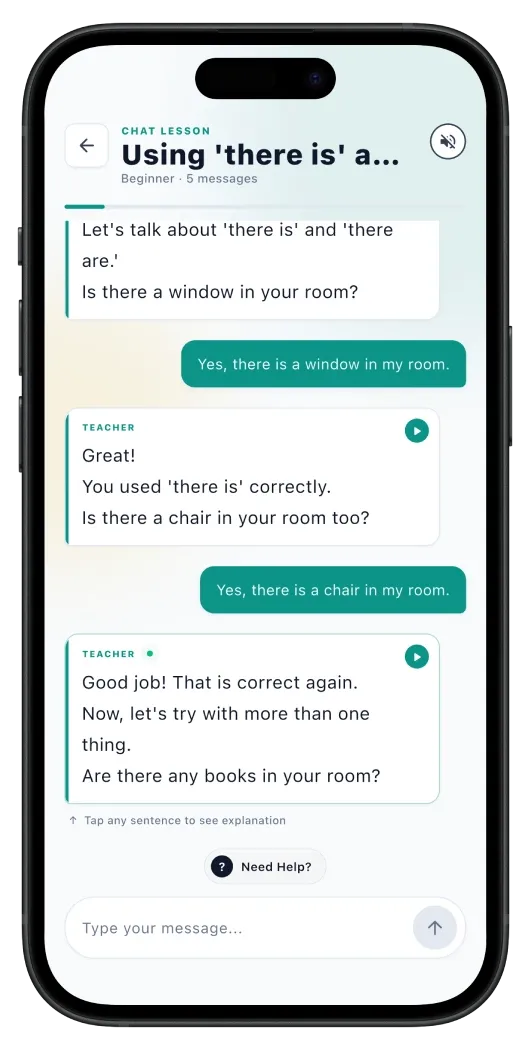
Pick a topic and chat with an AI tutor in Hungarian. It corrects your cases, adapts to your level, and gives you a full report — what you got right, what to drill, and new vocabulary to keep.
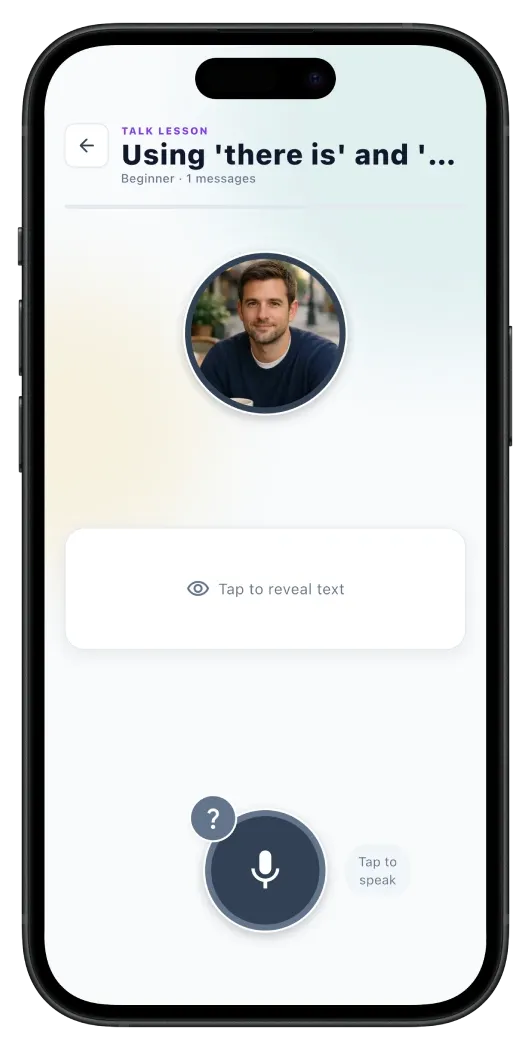
Practice Speaking Hungarian Out Loud
Talk to an AI teacher who responds in real time, fixes your pronunciation (including those tricky 'gy' and 'ty' sounds), and keeps the conversation going. Real Hungarian speaking practice whenever you want.
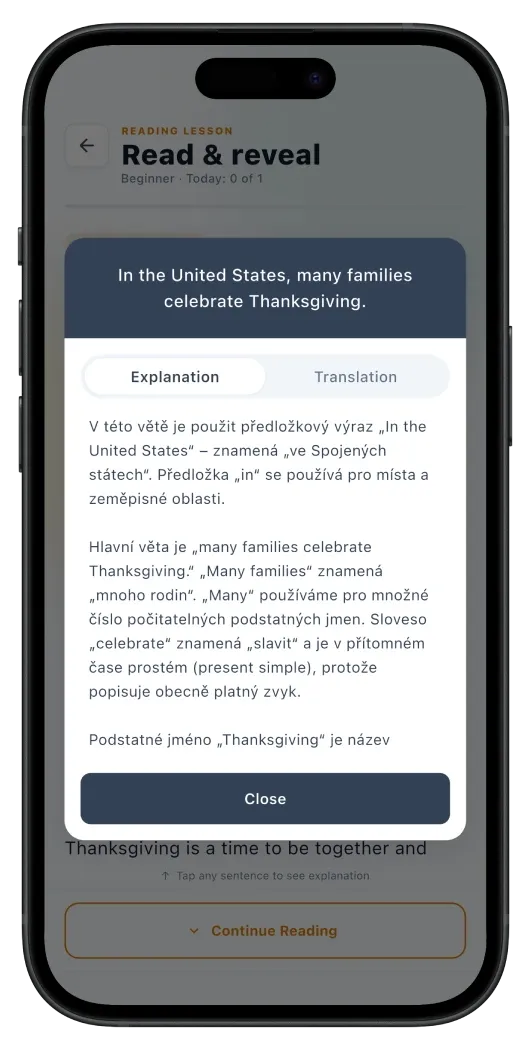
Understand Hungarian Grammar Clearly
Tap any sentence to see a full translation, case breakdown, and every suffix explained. Finally understand vowel harmony, agglutination, and definite-vs-indefinite conjugation — not just memorize phrases.
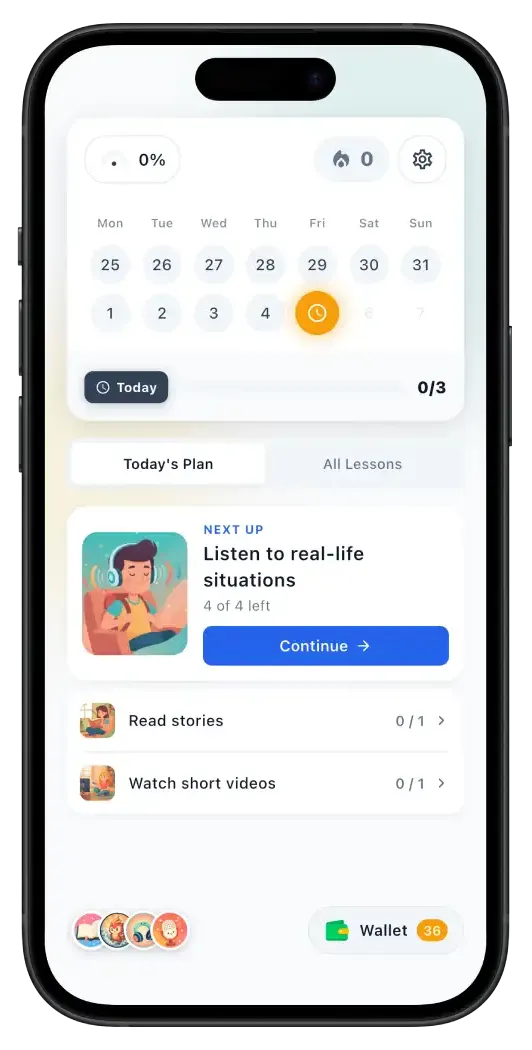
Build a Hungarian Practice Habit
Set a daily goal, track your streak, and watch your Hungarian comprehension grow. Erla adjusts to your pace — whether you have 5 minutes on the metró or 30 minutes at home with coffee.
Start Practicing Hungarian Today
Download Erla free and begin sharpening your Hungarian. Just 10 minutes a day builds real comprehension — so Budapest, family calls, and Hungarian TV stop feeling out of reach.
Hungarian Facts English Speakers Love
Surprising details that make practicing Hungarian feel more rewarding — and more doable — than the 'hardest European language' reputation suggests.
You already speak Hungarian — a little. 'Coach' comes from the village of Kocs, where the horse-drawn carriage was invented in the 15th century. 'Paprika', 'goulash', 'biro' (for László Bíró, inventor of the ballpoint pen), 'hussar', and 'sabre' also slipped from Hungarian into English.
Hungarian has no grammatical gender. Unlike German, Spanish, or French, there's no 'he/she/it' trap — the same word 'ő' covers all of them. For English speakers burned by der/die/das, this alone removes a whole category of learning overhead.
Hungarian gave the world an absurd number of 20th-century icons: Harry Houdini, Ernő Rubik, John von Neumann, Edward Teller, Béla Lugosi, and the Gabor sisters. Budapest coffeehouses in 1900 produced more Nobel laureates per capita than almost anywhere on Earth.
Hungarian vowel harmony means suffixes shape-shift to match the word they attach to — so 'in the house' is házban but 'in the garden' is kertben. It sounds like extra work, but your ear catches it faster than you'd think once you stop fighting it and start listening for it.
Learn Hungarian and you've nearly mastered the Uralic family. Its closest relatives — Finnish and Estonian — sit over 1,000 kilometers away. For an English speaker, Hungarian is the only chance in Europe to practice an agglutinating, non-Indo-European language without flying to Asia.
Hungarian by the Numbers — For English Speakers
Why practicing Hungarian pays off more than most English speakers expect.
Per the U.S. Census, 1.4M+ Americans report Hungarian ancestry — with long-rooted communities in Cleveland, Pittsburgh, New Jersey, and California.
Budapest is one of Europe's top weekend-break cities. English gets you far in District V, but locals warm up immediately when you switch into Hungarian.
Hungarian is FSI Category IV — the same bracket as Finnish and Thai. Doable with consistent daily practice, and short Erla sessions add up fast.
No masculine, feminine, or neuter to memorize. One surprise upside that makes Hungarian gentler on English speakers than German, French, or Spanish.
Why English Speakers Practice Hungarian
The real reasons people come back to Hungarian — concrete life goals, not abstract language benefits.
Reconnect with Hungarian Heritage
From Cleveland's Buckeye Road to New Brunswick, NJ and the Pittsburgh suburbs, 1.4 million Americans carry Hungarian ancestry. Practicing Hungarian lets you read nagyapa's letters, follow family stories, and surprise older relatives who assumed the language had skipped a generation.
Live or Work in Budapest
Budapest has become a top digital-nomad and expat hub — affordable rent, tech jobs at Morgan Stanley, BlackRock, Prezi, and LogMeIn, plus EU residency paths. Hungarian unlocks friendships, lease paperwork, and promotions that English alone can't reach.
Study Medicine or Dentistry in Hungary
Semmelweis, Debrecen, Szeged, and Pécs run world-class English-language medical, dental, and veterinary programs for a fraction of U.S. tuition. Classes are in English, but Hungarian makes clinical rotations, patient interviews, and everyday life dramatically easier.
Hungarian Practice Questions Answered
Straight answers for English speakers sharpening their Hungarian — whether you took classes long ago, have Hungarian roots, or are moving to Budapest.
Yes, that's the ideal use case. Erla skips the alphabet drills and drops you into real Hungarian you once followed. Listening-first sessions reactivate vocabulary buried in your memory, while grammar taps refresh cases and vowel harmony on demand. Most returning learners feel comprehension come back within two to three weeks.
Start Practicing Hungarian Today
Download Erla free and begin sharpening your Hungarian. Just 10 minutes a day builds real comprehension — so Budapest, family calls, and Hungarian TV stop feeling out of reach.
Questions About Practicing Hungarian?
Our team is here to help you start your Hungarian practice journey with confidence.
Contact usOr email us directly at a@justonedev.co