Practice 🇺🇦 Ukrainian by Listening, Reading, and Speaking
Train your ear on real Ukrainian — the way people speak in Kyiv and Lviv. Decode the Cyrillic script in context, master all seven cases naturally, and chat with an AI tutor. No flashcards, no rote drills.
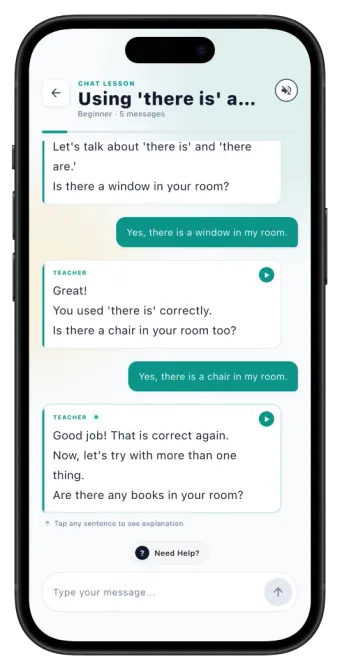
How Erla Helps You Practice Ukrainian
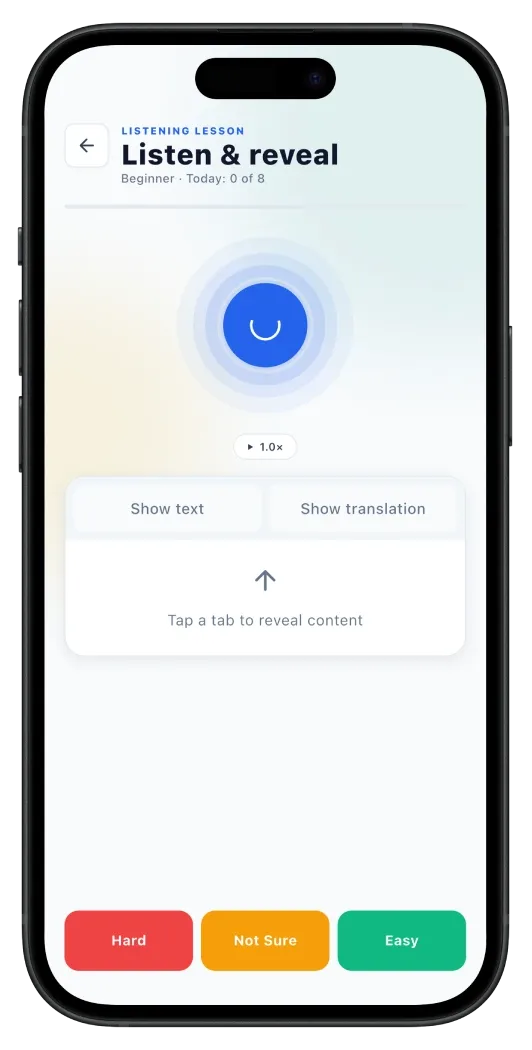
Hear Real Ukrainian, Not Textbook Audio
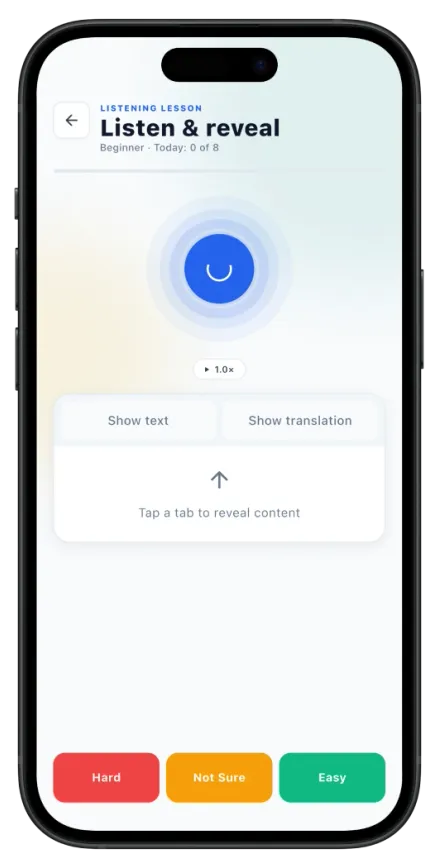
Listen to natural Ukrainian sentences spoken the way people actually talk in Kyiv, Lviv, and Odesa. Guess the meaning first, then reveal the text. Your ear tunes to Ukrainian's melodic intonation and soft consonants faster than you expect.
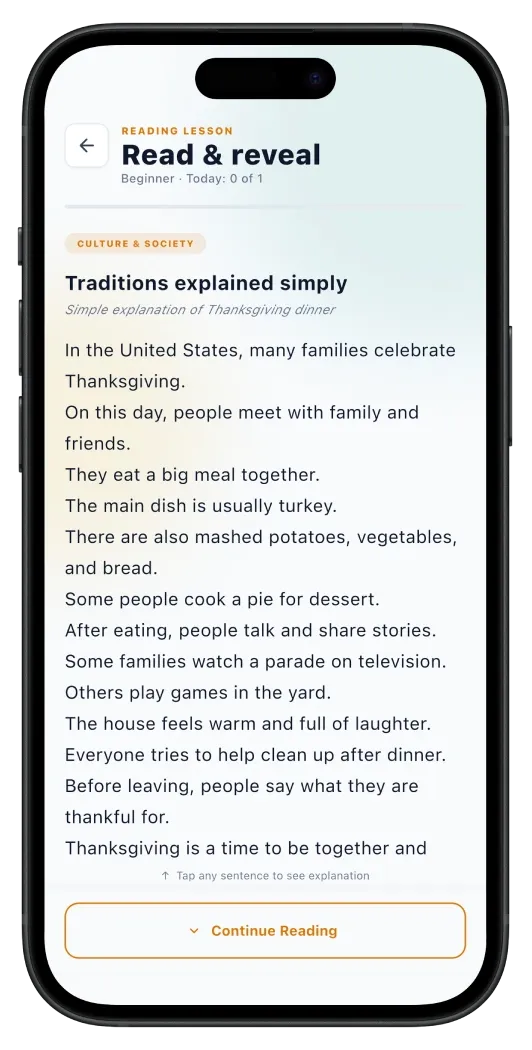
Read Ukrainian Stories That Make Words Stick
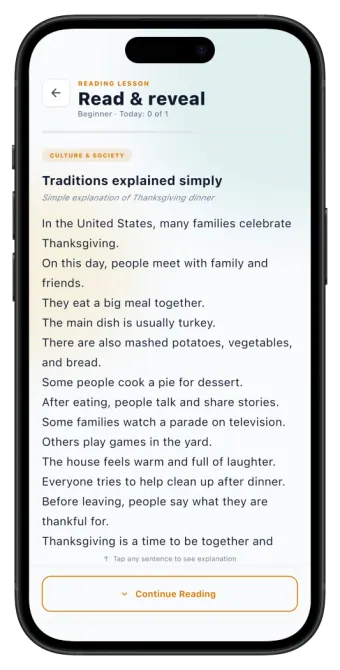
Short, engaging stories in Ukrainian — Carpathian traditions, modern Kyiv life, folk heritage, contemporary culture. New vocabulary sticks because it lives inside a story, not a flashcard list. Tap any word to dig deeper.
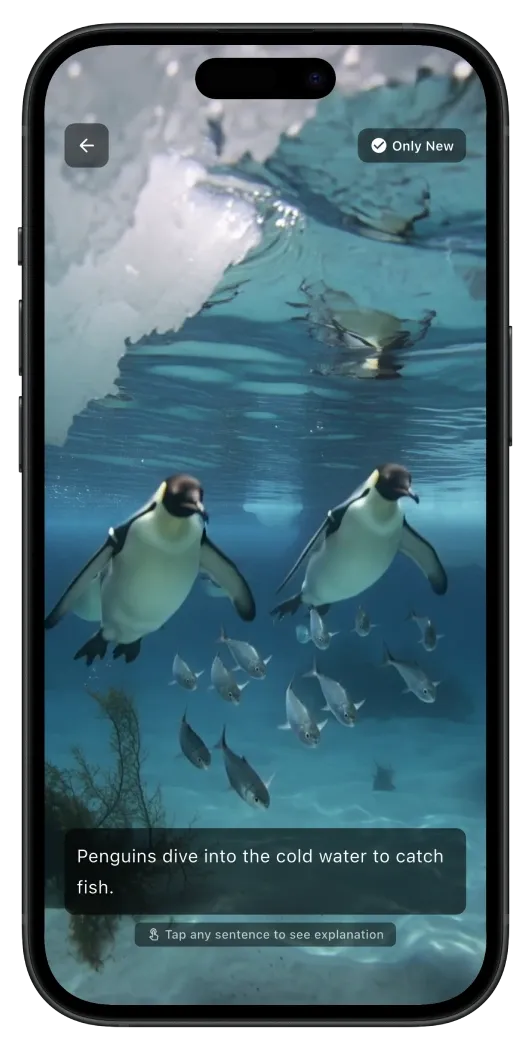
Watch Ukrainian Videos Without Subtitles First
Bite-sized clips play in Ukrainian with zero text — pushing your brain to process the language naturally. The second time, subtitles appear so you can confirm what you understood. Swipe for the next one.
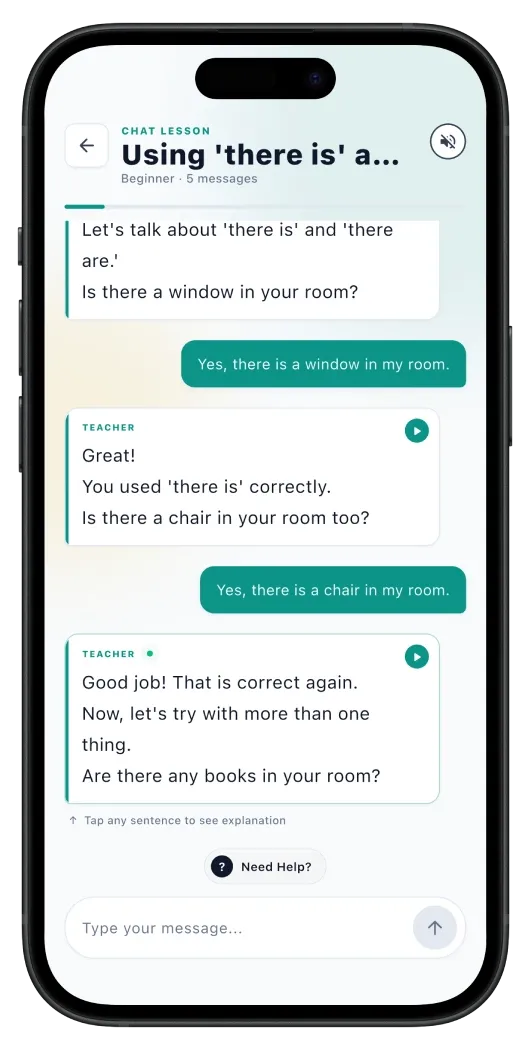
Have a Real Ukrainian Conversation Now
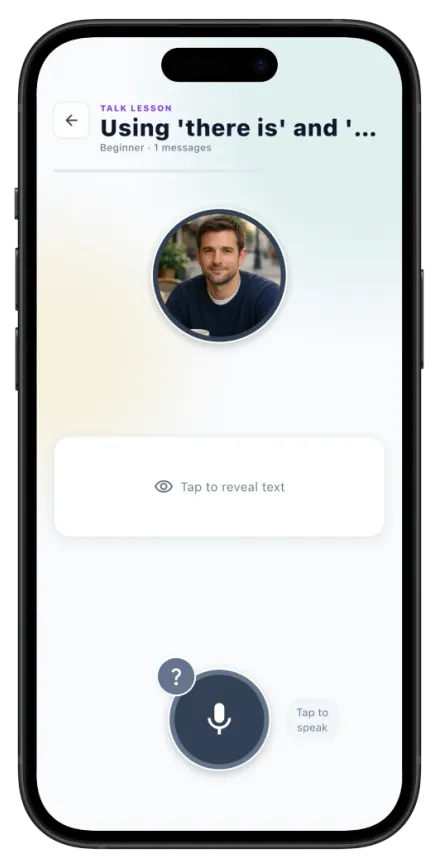
Pick a topic and message an AI tutor in Ukrainian. It corrects your grammar, adapts to your level, and gives a full session report — strengths, weak spots, and the vocabulary you actually used.
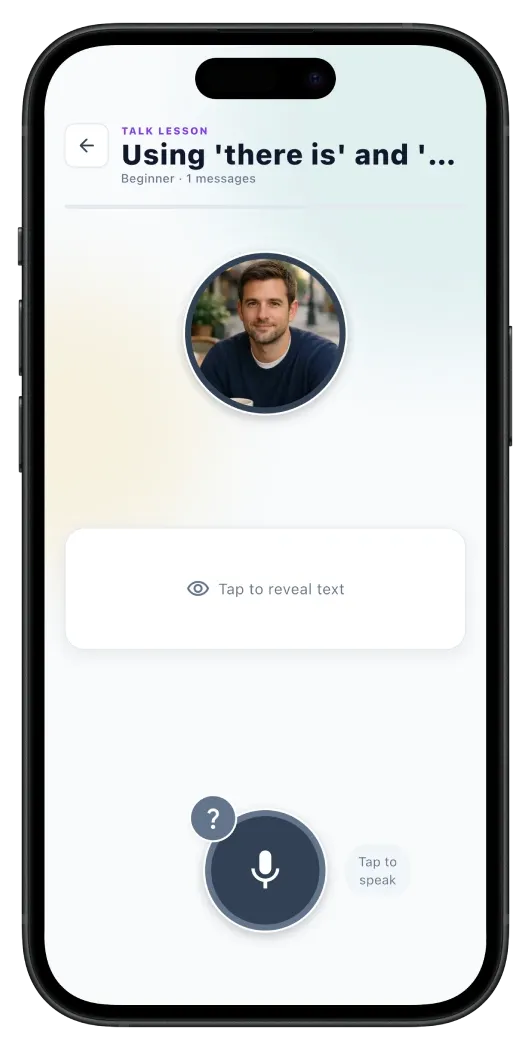
Practice Speaking Ukrainian Out Loud
Speak with an AI teacher that responds in real time, fixes your pronunciation, and keeps the conversation flowing. No scheduling, no judgment — real Ukrainian speaking practice whenever you have a free five minutes.
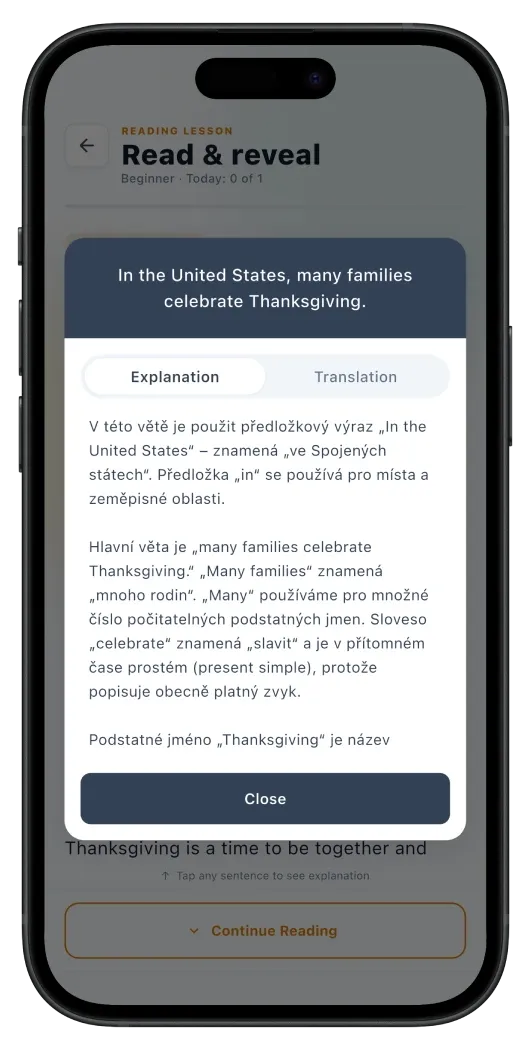
Finally Make Sense of Ukrainian Cases
Tap any sentence to see a full translation, grammar breakdown, and case endings explained. Understand all seven cases — including the unique vocative — and verb aspects without memorizing tables.
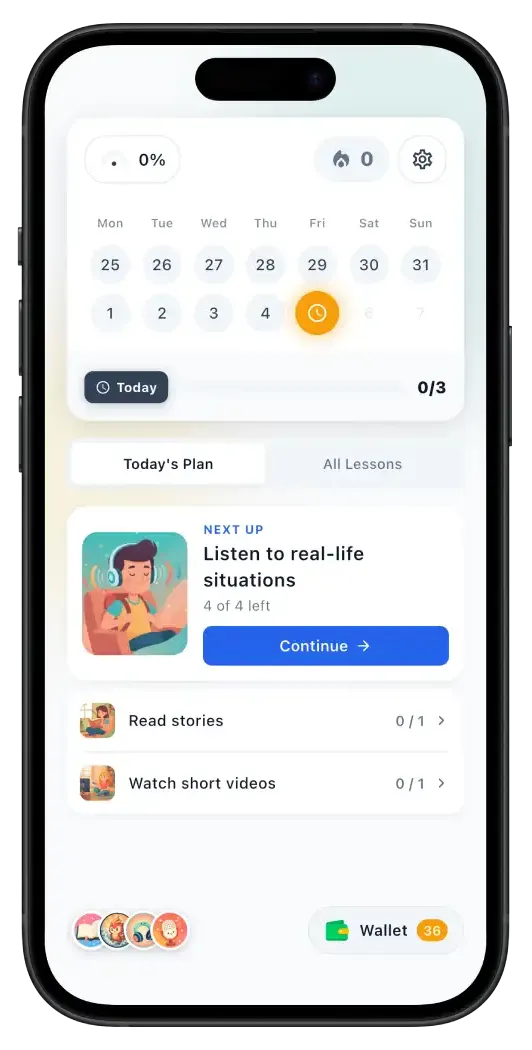
Build a Ukrainian Practice Habit
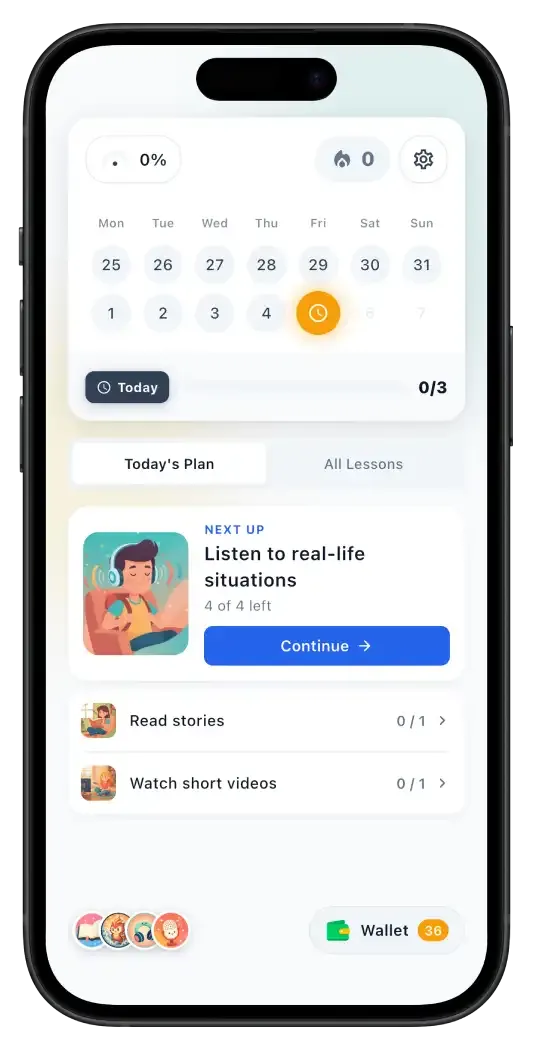
Set a daily goal, keep your streak alive, and watch your Ukrainian comprehension climb. Erla adapts to your pace — whether you have five minutes on the subway or thirty on the couch.
Start Practicing Ukrainian Today
Download Erla and see how naturally Ukrainian comprehension grows when you practice through listening. Free to start, no credit card, no commitment.
Fascinating Facts About Ukrainian
What makes Ukrainian a uniquely rewarding language for English speakers to practice
Ukrainian uses seven grammatical cases — including the vocative, used only when addressing someone directly (Mаксиме!, мамо!). Russian dropped this case in everyday speech centuries ago, but Ukrainian kept it alive, giving the language a warmth English can't quite replicate.
Ukrainian is one of the most phonetic languages in Europe — words are pronounced almost exactly as they're written. Once you've learned the 33 letters, you can read aloud with confidence, unlike English where 'though,' 'through,' and 'tough' all rhyme differently.
English borrowed more from Ukrainian than most people realize: cossack (from козак, 'free man'), steppe, borscht, hetman, and pysanka all entered English directly from Ukrainian. Practicing Ukrainian reconnects you with words you've used your whole life.
Ukrainian's melodic intonation has earned it the nickname 'the singing language' among linguists. The abundance of soft consonants (ть, дь, нь) and open vowels gives spoken Ukrainian a flowing, musical quality — which is exactly why training your ear with audio works so well.
The Ukrainian alphabet contains 33 letters, including ї, є, ґ, and і — none of which exist in Russian Cyrillic. These letters mark sounds unique to Ukrainian and are one reason Ukrainian and Russian, despite looking similar on the page, sound clearly different to a trained ear.
Ukrainian: A Language That Matters More Than Ever
Join 40 million native speakers and a global diaspora keeping one of Europe's richest languages alive
Mostly in Ukraine, with major diaspora communities in Canada, the US, Poland, and Germany
Including second-language speakers across Europe, North America, and rapidly growing learner communities
Official in Ukraine, recognized minority language in 5 European countries, and an EU candidate language
Second most-spoken Slavic language by native speakers, with the largest vocabulary among East Slavic languages
Why Practicing Ukrainian Pays Off
Real reasons English speakers are practicing Ukrainian right now
Tech, Outsourcing, and Trade
Ukraine's IT sector is one of Europe's largest, with thousands of engineers serving US and UK companies. Ukrainian gives you the edge in working with outsourcing partners, vetting Ukrainian-language documents, and building relationships in a market that increasingly turns westward. Recruiters notice candidates who can bridge both worlds.
Heritage and Family Connections
Over 1.5 million Americans and 1.3 million Canadians claim Ukrainian heritage. Practicing Ukrainian unlocks conversations with grandparents, in-laws, and cousins you've never been able to talk to in their own language. It also opens up Ukrainian literature, music, film, and the rapidly growing diaspora media.
Travel, Volunteering, and Aid Work
From volunteering with Ukrainian refugees to traveling through Lviv, Kyiv, and the Carpathians, Ukrainian transforms what's possible. NGOs, journalists, and aid organizations are actively recruiting English speakers with Ukrainian skills. Even basic comprehension makes you dramatically more useful — and more welcome.
Practicing Ukrainian: Your Questions Answered
Everything English speakers want to know about practicing Ukrainian with Erla's immersive listening method.
Yes — Ukrainian and Russian share roots but diverge in vocabulary, pronunciation, and grammar. Ukrainian has unique sounds like the soft 'г' (a fricative h), distinctive letters ї, є, ґ, and a vocative case Russian rarely uses. Erla's audio teaches authentic Ukrainian as spoken in Ukraine — not a Slavic blend.
Start Practicing Ukrainian Today
Download Erla and see how naturally Ukrainian comprehension grows when you practice through listening. Free to start, no credit card, no commitment.
Questions About Practicing Ukrainian?
Our team is here to help you build a Ukrainian practice habit that actually sticks
Contact usOr email us directly at a@justonedev.co